
At a Glance
Problem: UI patterns were inconsistent, difficult to scale, and costly to maintain
Role: Senior UX Designer, design system lead
Scope: Enterprise web products, internal tools, cross-team adoption
Outcome: Faster design and development, improved consistency, and a shared foundation used across teams
Where Drift Began
Drift started as a growing Figma file teams relied on but could not fully trust. Components lacked structure, documentation was thin, and design did not consistently match code. My role was to turn it into something teams could actually build fromO
When the Old System Started Showing Its Limits
What worked early did not scale. UI became inconsistent, components needed constant rework, and design and development fell out of sync. Without clear ownership, the system created more friction than speed.
What We Optimized For
Before building, we aligned on what mattered most. Consistency, speed, clarity, and scalability guided every decision moving forward.
Making The Case
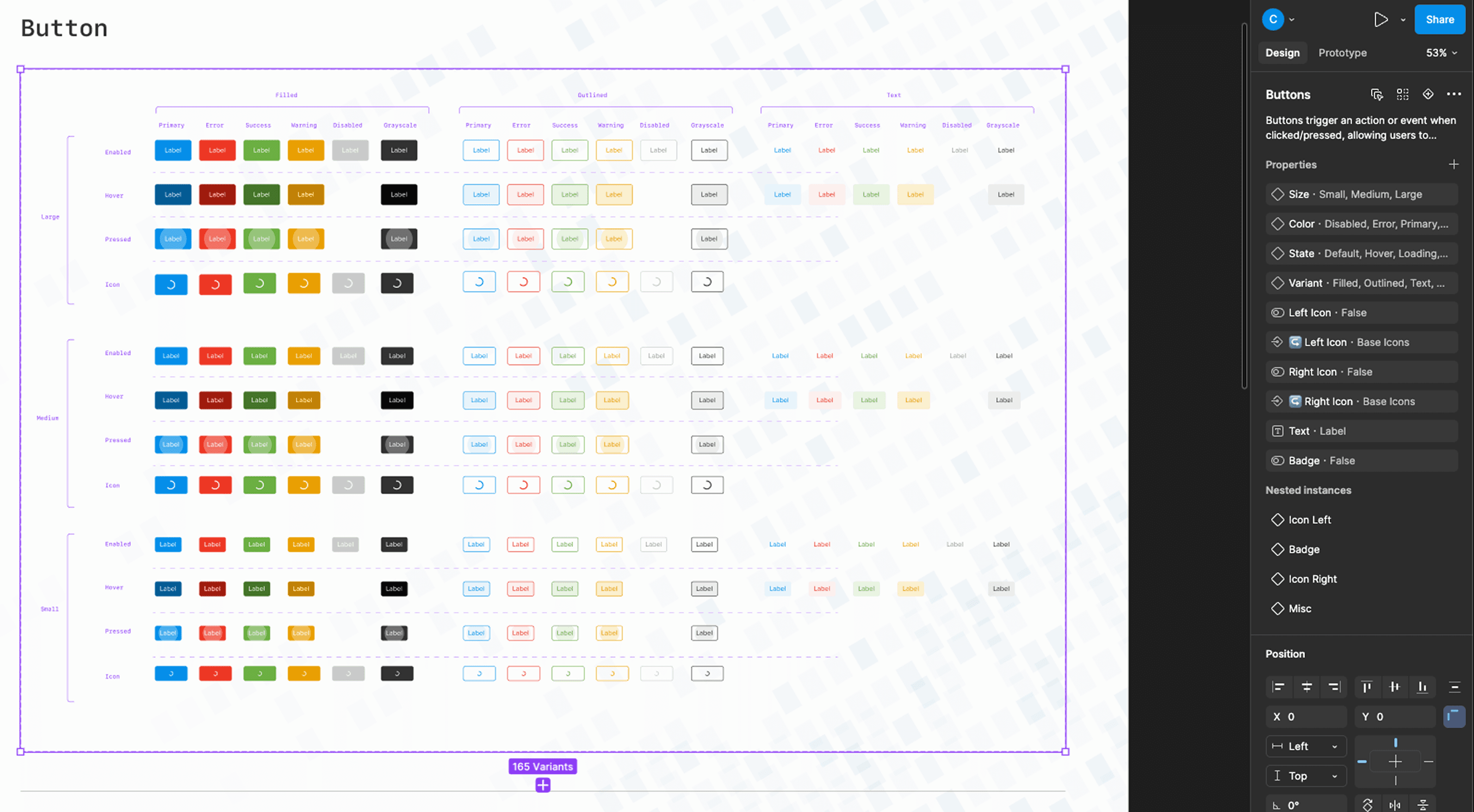
We tied system issues directly to lost time and slower delivery. With support from engineering, Drift was positioned as a long-term investment instead of a simple cleanup effort.
Getting The Basics Right
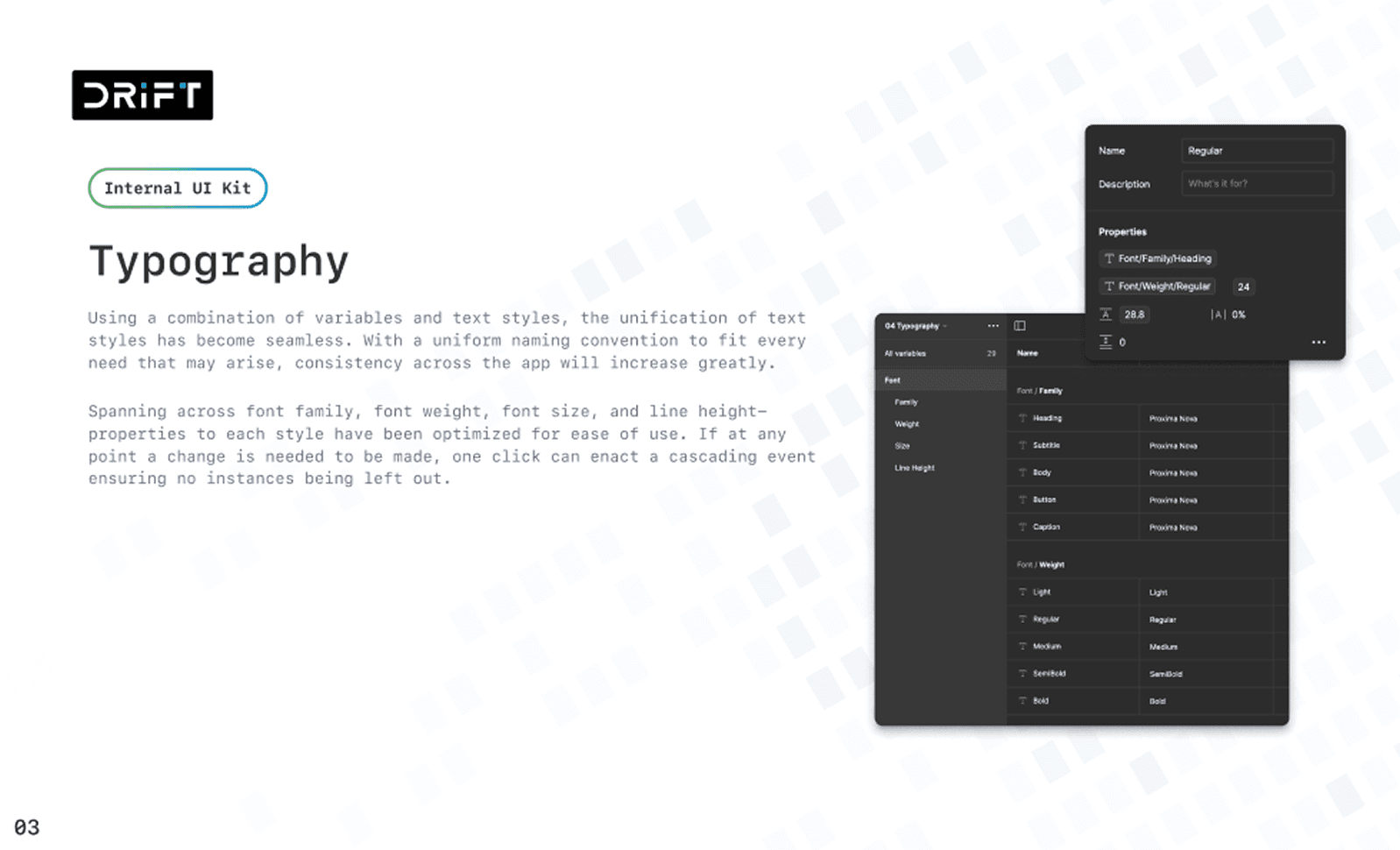
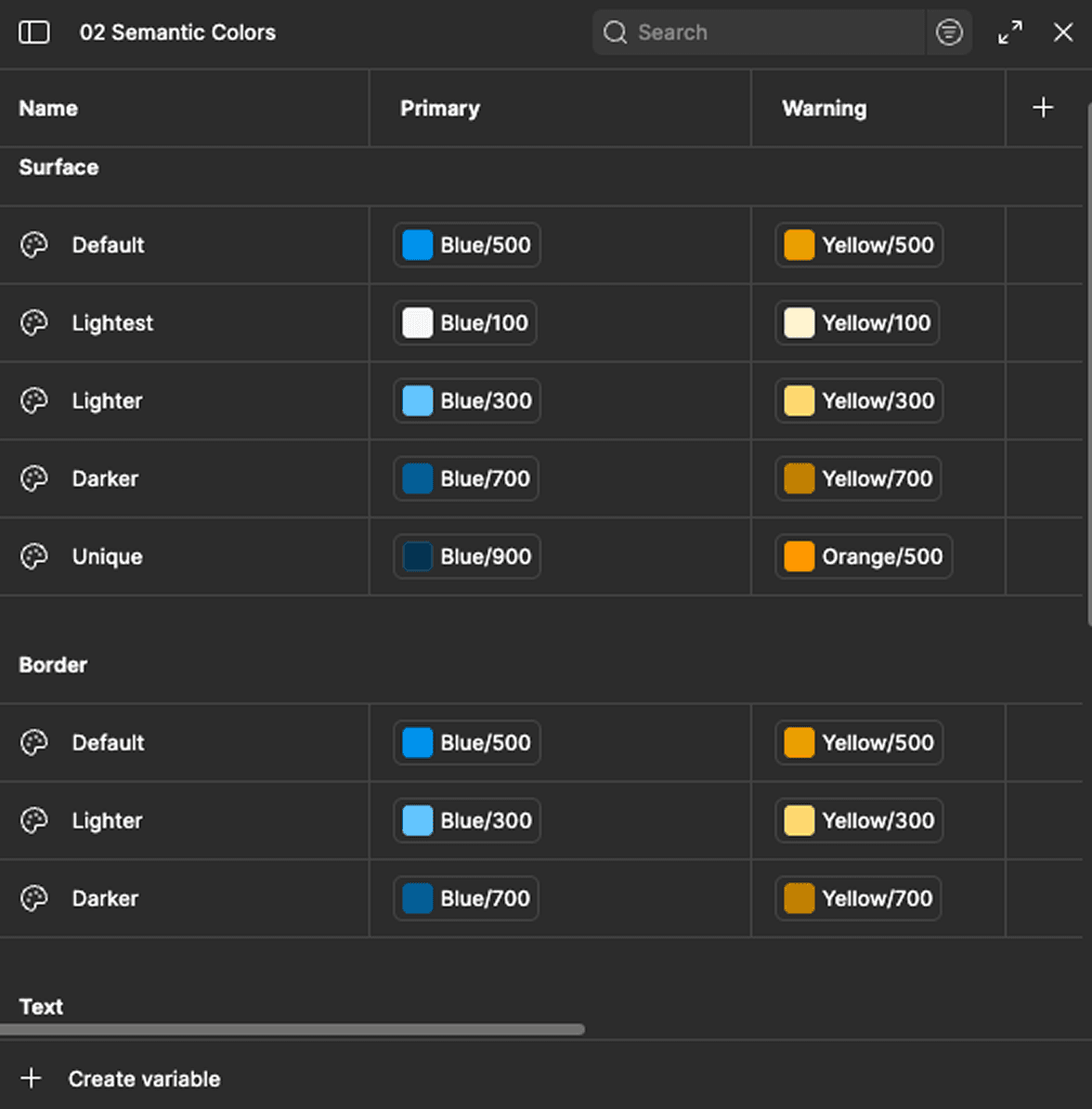
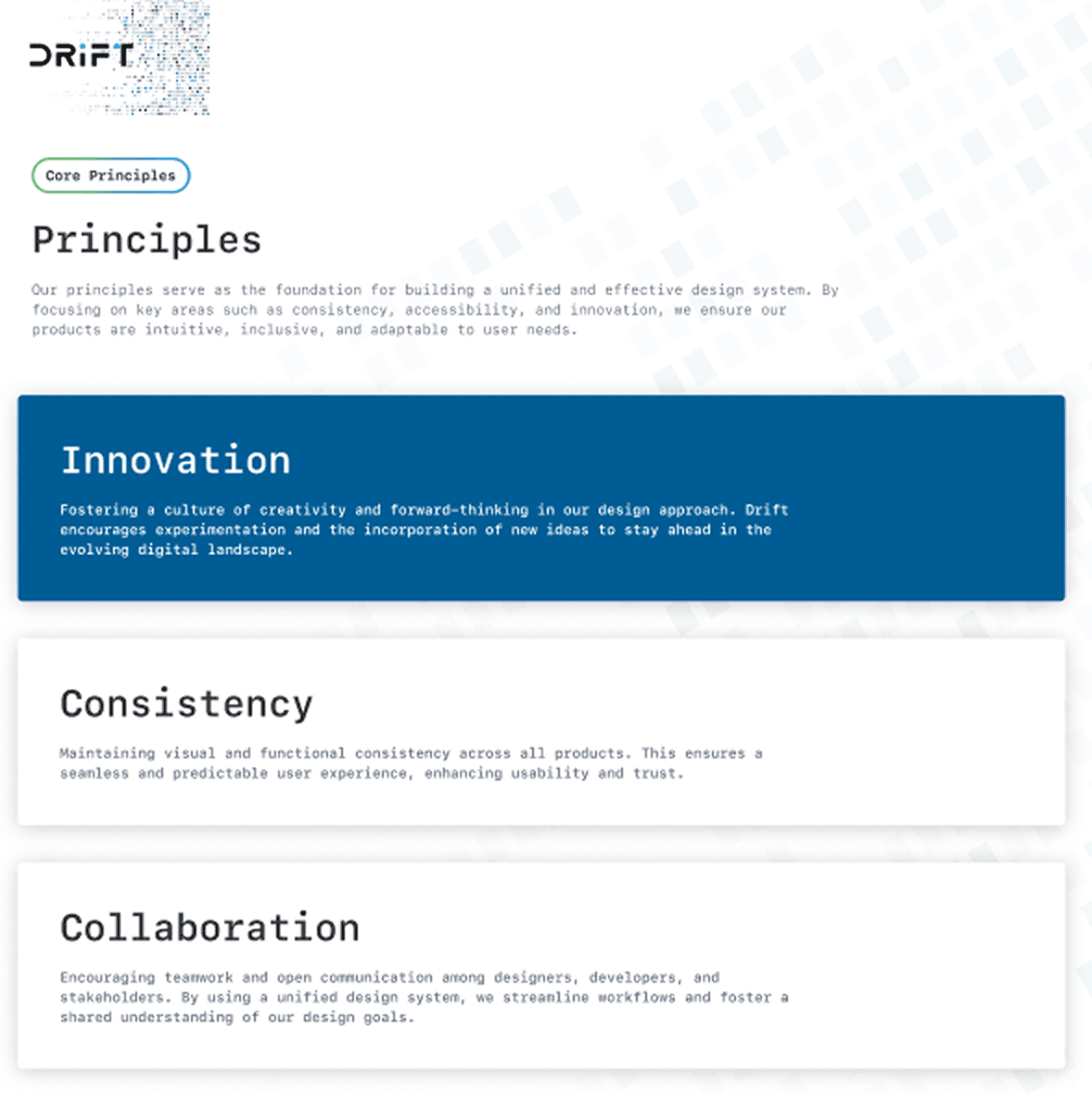
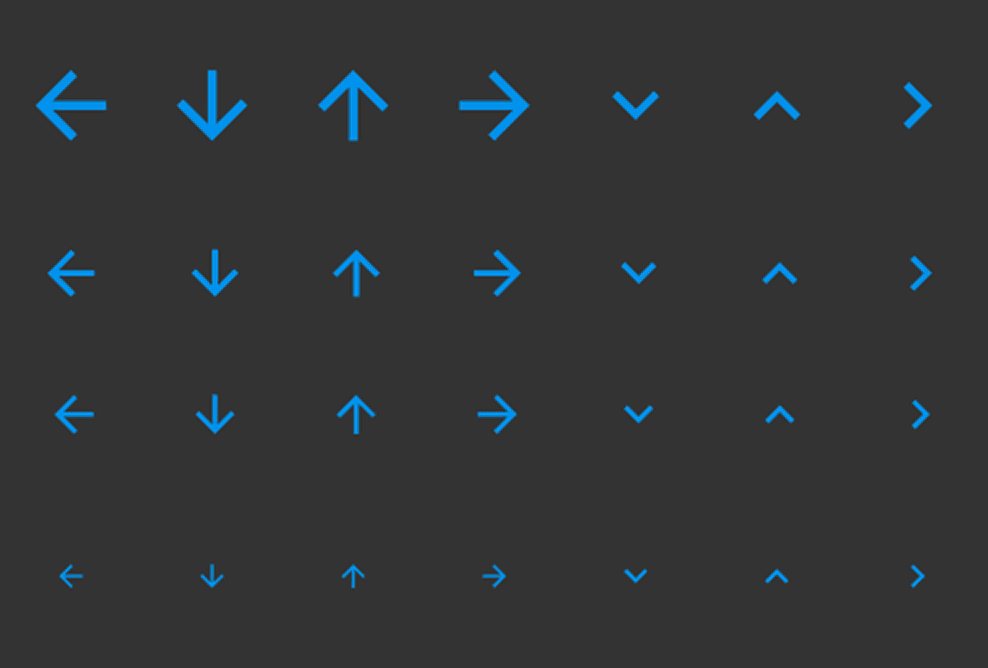
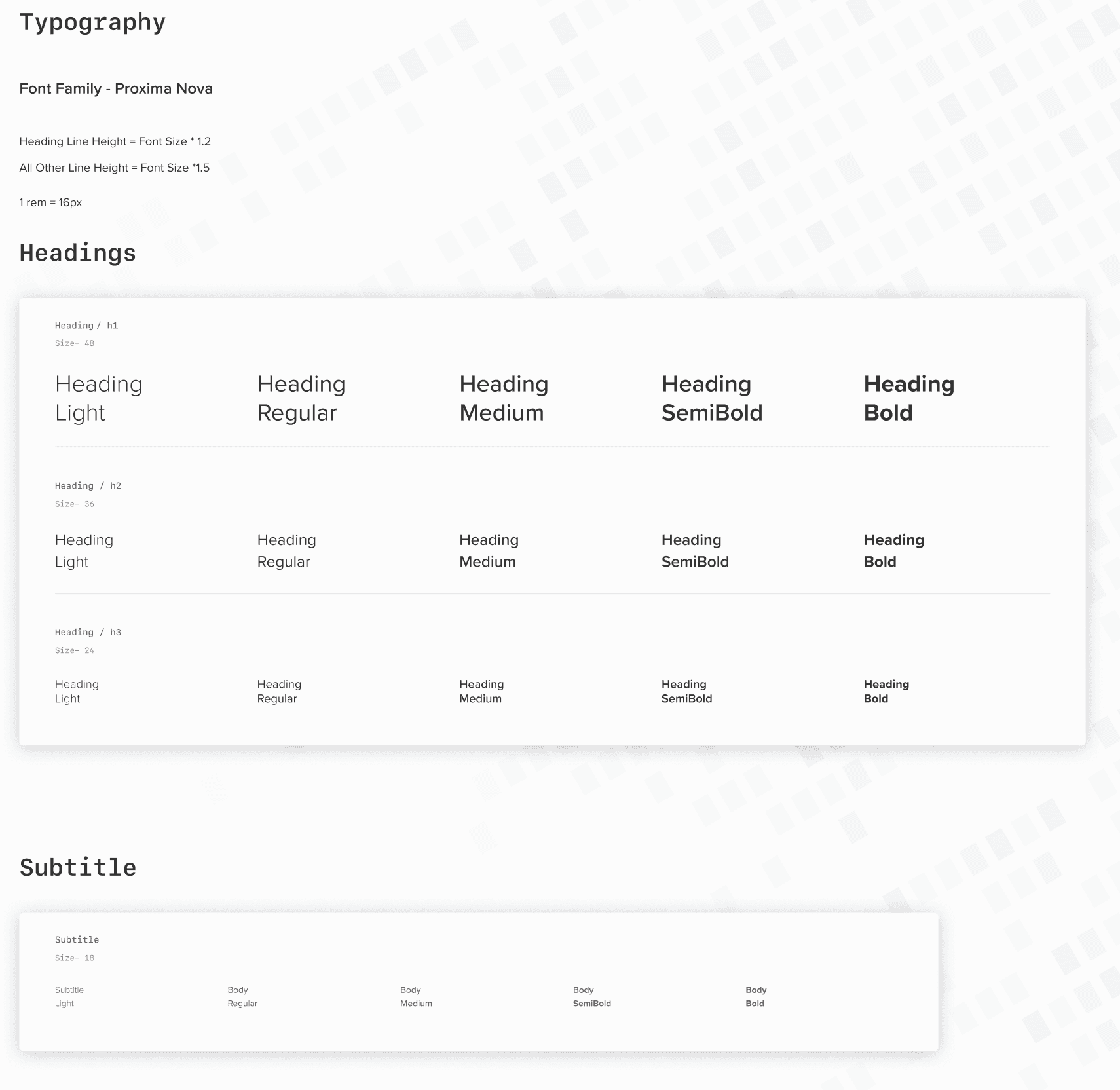
We started with the fundamentals. Semantic color tokens, standardized typography, and an 8px grid system created a stable foundation. Components were then built using atomic principles on top of Material UI so they could scale.
As Drift expanded across the organization, these outcomes reflect improvements in speed, consistency, and collaboration.
30%
5
6 mo.
12
Where Drift Is Today
Drift is now used across teams and products as a shared system. I manage its evolution, ensuring it stays consistent, scalable, and aligned with how we build.

The Important Matters
Scaling & Leadership
Results That Last
Lessons Learned