
Pink Flower
Pink Flower
Pink Flower

Title

Title

Senior User Experience Designer

Senior User Experience Designer

Timeline

Timeline

2025-Present

2025-Present

Tools

Tools

Figma, Lucid, Jira

Figma, Lucid, Jira

At a Glance

  • Project Type: Internal enterprise platform

  • Focus: Risk-based invoice auditing and funding automation

  • Responsibilities: Workflow design, interaction design, cross-functional alignment

  • Users: Internal audit and funding teams

Overview

This project is part of a larger internal effort to modernize how invoice risk is evaluated at the point of funding. Today, every client invoice is subject to the same final manual review, regardless of history, volume, or demonstrated risk profile. While this approach provides consistency, it also introduces friction for trusted clients and adds significant operational overhead as invoice volume scales.

The objective of this work is to introduce a risk-based auditing system that allows low-risk invoices to fund automatically, while ensuring higher-risk cases still receive deliberate human review. The system is designed to improve speed without sacrificing control, transparency, or confidence in funding decisions.

The Problem

Once an invoice passes initial audit checks and there is high confidence it will result in payment from the debtor, a secondary client review is still required before funding. This review is applied uniformly across all clients, including those with long-standing relationships and consistently clean histories.

Over time, this created two compounding issues:

  • Manual approval effort increased as invoice volume grew

  • Low-risk clients experienced funding delays that did not meaningfully reduce organizational risk

Auditors already evaluate a variety of factors when reviewing a client, such as business stability, outstanding balances, invoice history, and behavioral patterns that may indicate fraud or operational strain. However, these considerations were not consistently structured or used to determine whether a human review was actually necessary.

Historically, the funding moment has been the most effective point to address uncertainty, since funds can be held if additional information is required. The challenge was identifying when that leverage added value, and when it did not.

Defining Success

Because the system is still being built, success was intentionally defined around operational behavior and observable outcomes, rather than finalized performance metrics.

We aligned on three categories of measurement:

  • Inputs: the number of invoices that bypass manual approval

  • Outputs: changes in cost per invoice, time spent approving invoices, and speed to funding

  • Observations: client satisfaction related to funding speed

This framework allowed teams to evaluate whether the system is working as intended once live, without overstating impact during the design phase.

Designing the Approach

Designing the Approach

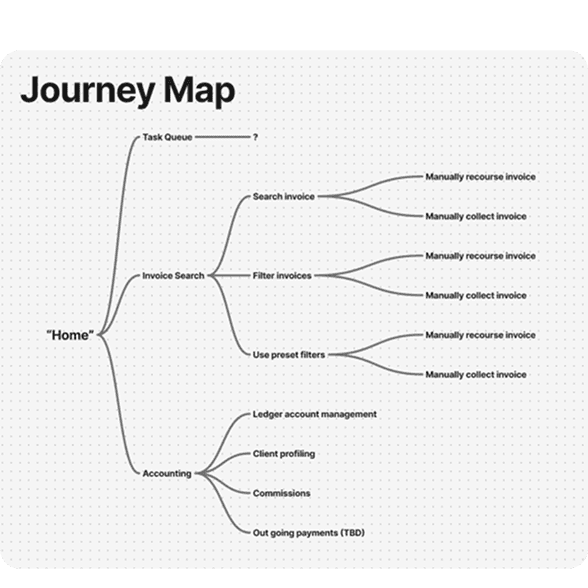
This work required moving from a one-size-fits-all review model to a selective, signal-driven approach. Early discovery focused on how auditors assess risk today and which factors consistently lead to meaningful intervention. Grounding the system in existing judgment patterns allowed automation without introducing unfamiliar logic or reducing trust. The goal was not to remove oversight, but to apply it more intentionally where it matters most.

This work required moving from a one-size-fits-all review model to a selective, signal-driven approach. Early discovery focused on how auditors assess risk today and which factors consistently lead to meaningful intervention. Grounding the system in existing judgment patterns allowed automation without introducing unfamiliar logic or reducing trust. The goal was not to remove oversight, but to apply it more intentionally where it matters most.

Defining meaningful risk signals clarified where automation could safely replace routine review.
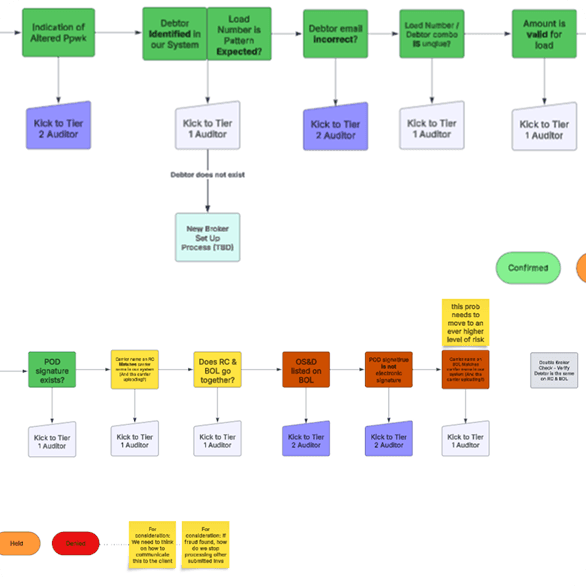
Automation is paired with visibility and clear intervention paths to maintain user confidence.

Automation is paired with visibility and clear intervention paths to maintain user confidence.

Workflow & Interaction Design

Workflow & Interaction Design

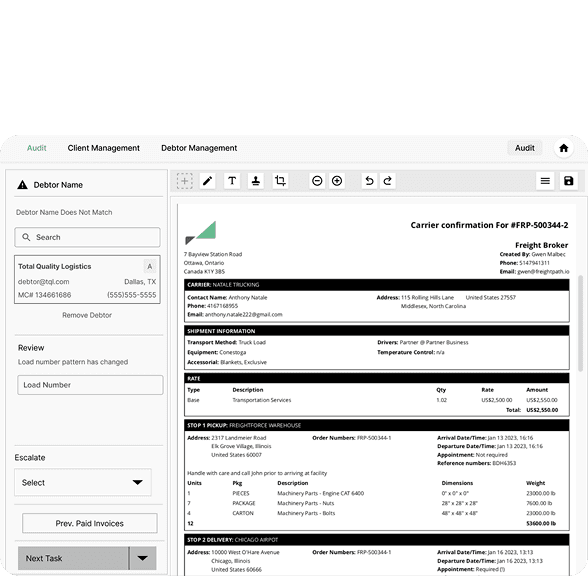
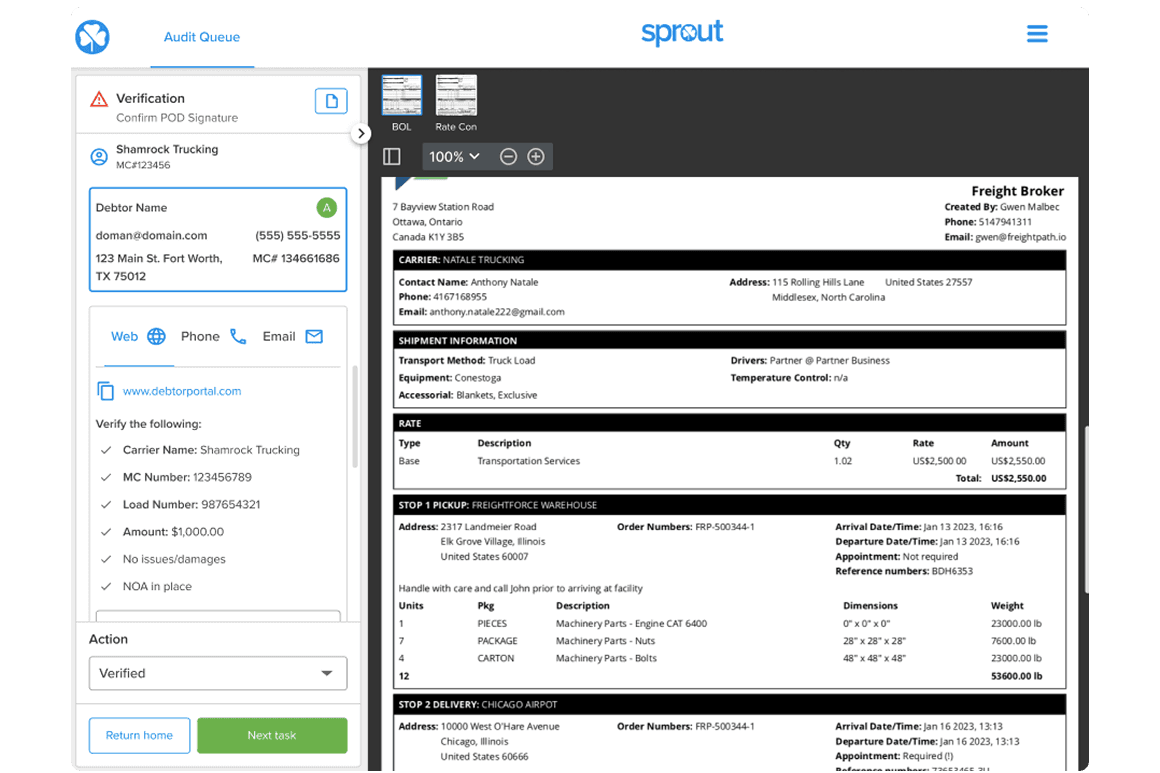
The workflow was designed to make automated decisions clear and defensible. Instead of simply advancing invoices, the experience surfaces why an invoice qualifies for automatic funding while preserving clear escalation paths. Each interaction supports a single, focused task with relevant context close at hand. This reduces cognitive load while keeping manual intervention fast and accessible.

The workflow was designed to make automated decisions clear and defensible. Instead of simply advancing invoices, the experience surfaces why an invoice qualifies for automatic funding while preserving clear escalation paths. Each interaction supports a single, focused task with relevant context close at hand. This reduces cognitive load while keeping manual intervention fast and accessible.

Iteration & Tradeoffs

Early concepts explored more configurability than the first release could support. Working closely with Product and Engineering, the design was narrowed to prioritize clarity, auditability, and delivery feasibility. Non-essential features were documented for future iterations rather than forced into the initial build. This ensured a strong foundation without unnecessary complexity.

Iteration & Tradeoffs

Early concepts explored more configurability than the first release could support. Working closely with Product and Engineering, the design was narrowed to prioritize clarity, auditability, and delivery feasibility. Non-essential features were documented for future iterations rather than forced into the initial build. This ensured a strong foundation without unnecessary complexity.

Deliberate tradeoffs balanced flexibility, clarity, and delivery constraints.

Current State & Early Signals

The application is still in active development, so final performance metrics are not yet available. However, early usability testing has surfaced encouraging signals:

  • Faster completion of approval-related tasks

  • Reduced abandonment in complex or edge-case workflows

  • Increased user confidence when making funding decisions

These early indicators suggest that removing unnecessary review does not reduce oversight when decisions are clearly explained and easy to intervene on.

Takeaways & Next Steps

This project reinforced the importance of designing automation as a collaboration between system logic and human judgment. Speed alone is not the goal — clarity and confidence are what make automation sustainable.

Next steps include validating real-world impact post-launch, monitoring where automation confidence breaks down, and iterating based on observed behavior rather than assumptions. Shipping a focused first version provides a strong foundation to evolve the system responsibly over time.

Additional Design Considerations
Balancing Automation with Trust

Automating a financial decision requires more than confidence in the data, it requires confidence from the people responsible for the outcome. A major focus of this project was ensuring users could understand why an invoice moved forward automatically and when they should step in. By making risk signals visible and escalation paths clear, the system reinforces trust rather than replacing judgment.

Balancing Automation with Trust

Automating a financial decision requires more than confidence in the data, it requires confidence from the people responsible for the outcome. A major focus of this project was ensuring users could understand why an invoice moved forward automatically and when they should step in. By making risk signals visible and escalation paths clear, the system reinforces trust rather than replacing judgment.

Balancing Automation with Trust

Designing for Edge Cases Without Slowing the Happy Path

Designing for Edge Cases Without Slowing the Happy Path

Designing for Edge Cases Without Slowing the Happy Path

Scaling a Shared Internal Platform

Scaling a Shared Internal Platform

Scaling a Shared Internal Platform

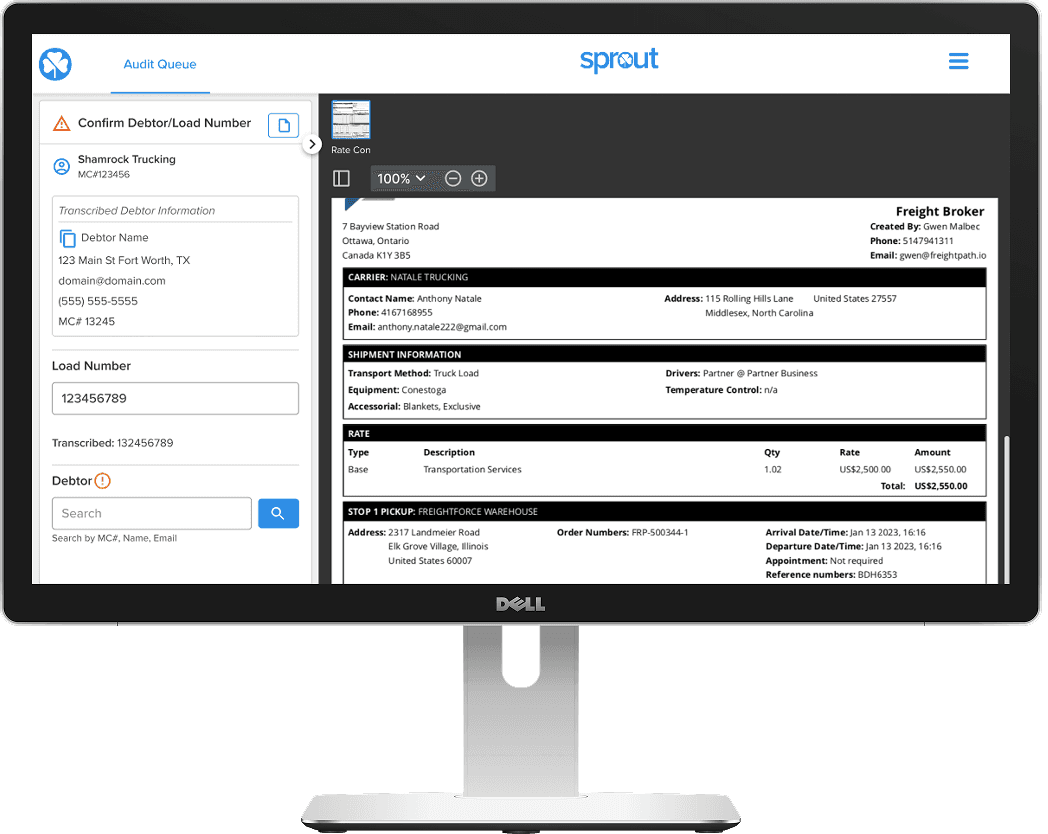
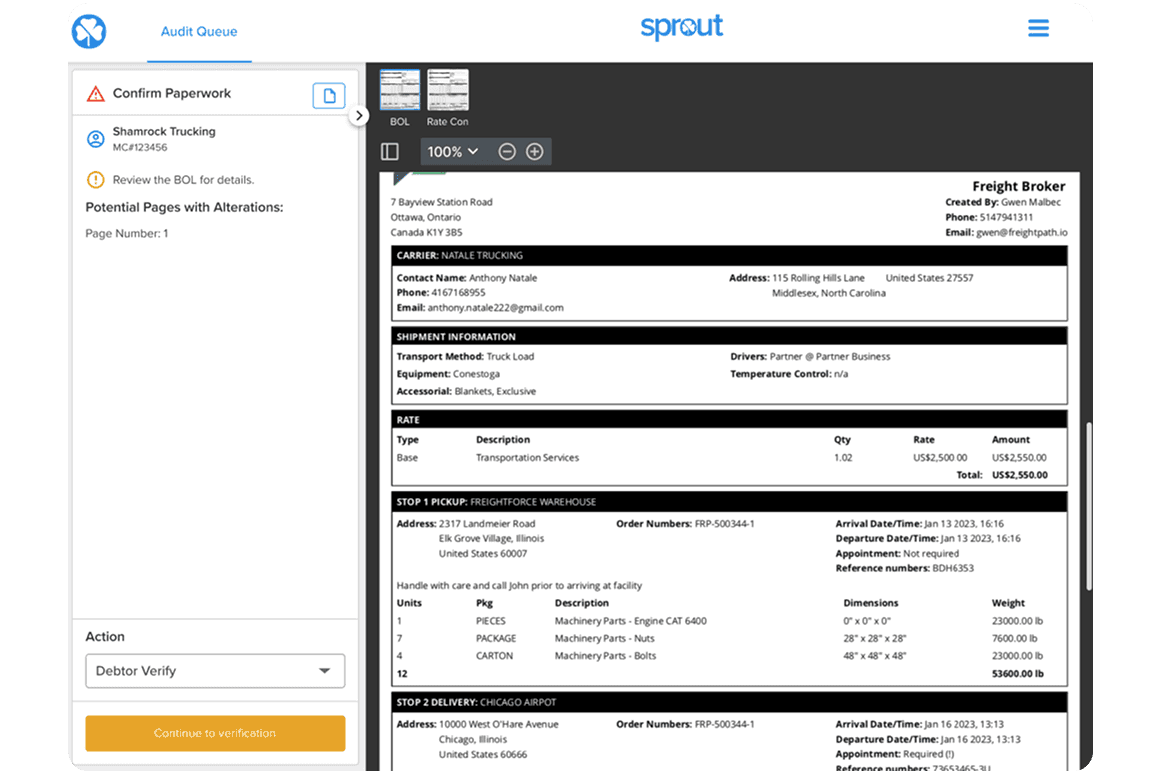
The secondary verification workflow is triggered when additional review is required beyond the initial audit
5

6

7